For public health and HIV program partners
We study how policy and funding decisions shape local HIV epidemics.
JHEEM, the Joint HIV Epidemiology and Economic Model, projects HIV trends in U.S. cities and states under different scenarios.
We work with public health partners to make this research useful for local decisions, and we're looking for new collaborators.
You don't need modeling expertise or local data to work with us.
Get in touchDeveloped by researchers at the Johns Hopkins Schools of Public Health and Medicine. Funded by the National Institutes of Health.
New HIV infections each year
Illustration, not real data
What we can help you answer
We study questions like these at the city and state level.
How many new HIV infections should we expect?
Projections of new infections, viral suppression and the number of people living with HIV, under current trends or alternative scenarios.
What mix of testing, treatment and PrEP would it take to reach our goals?
Comparisons of interventions and the scale needed to move local infections toward Ending the HIV Epidemic targets.
What happens if Ryan White or CDC funding is cut or interrupted?
Estimates of additional infections if federal HIV programs end or pause, and how a shorter interruption compares with permanent loss.
Does a budget cut save money, or cost more later?
Comparisons of program spending today with the future care costs it may prevent, to inform how resources are allocated.
How will the population of people living with HIV change over the next 15 years?
Projections of the size and age of the population living with HIV, to support planning for aging-related care, workforce and services.
How a collaboration works
We already work with several health departments. A collaboration usually looks like this.
You bring the question
Tell us the decision you're facing: a budget change, a new program or a planning target.
We tailor and run the model
We set up scenarios that match your question and run them for your city or state.
We share results you can use
Plain-language summaries, presentations for your leadership or board, and interactive tools for your staff.
What partners contribute
Our models are built on publicly available data. Your local knowledge helps us put it in context.
- The local questions and priorities that shape our analyses
- Context on programs, populations and policy that data alone can't capture
- Feedback on how results are framed and presented
Get in touch
If your organization has a question our models could help answer, or you'd simply like to learn more, we'd be glad to hear from you.
A few lines about your organization, your city or state, and what you're working on is enough to start.

Parastu Kasaie, PhD
Associate Scientist
Johns Hopkins Bloomberg School of Public Health
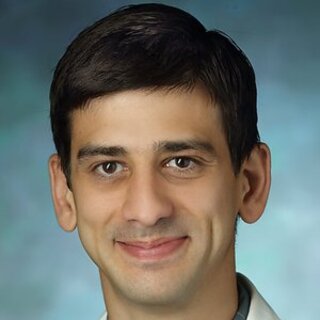
Todd Fojo, MD, MHS
Associate Professor
Johns Hopkins School of Medicine
With a team of epidemiologists, physicians and modelers. Meet the team.
This research is supported by the National Institutes of Health (K08MH118094, K01AI138853, P30AI094189, R01MD018539). The content is solely the responsibility of the authors and does not necessarily represent the official views of the NIH.